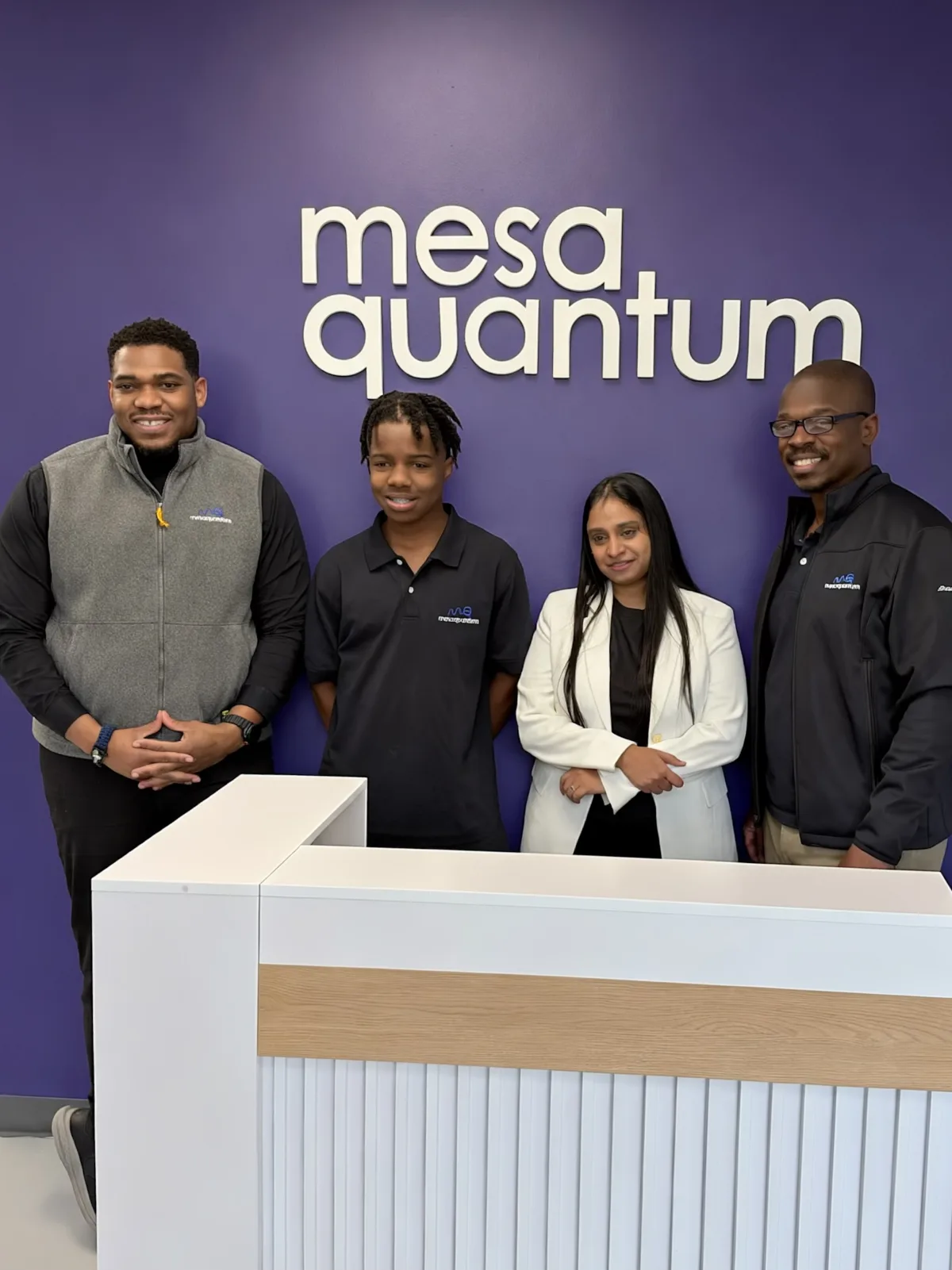
Mesa Quantum's new website needed a jump start and a fixed date. My son and I came in to lead the team and make it happen, and last week we flew to Boulder for the ribbon cutting.
Mesa Quantum's new website needed a jump start. The company had outgrown the site it put up to get going, they had a fixed date, the ribbon cutting for their new Boulder headquarters, and about two months to get there. So my son and I came in to lead the team and make it happen.
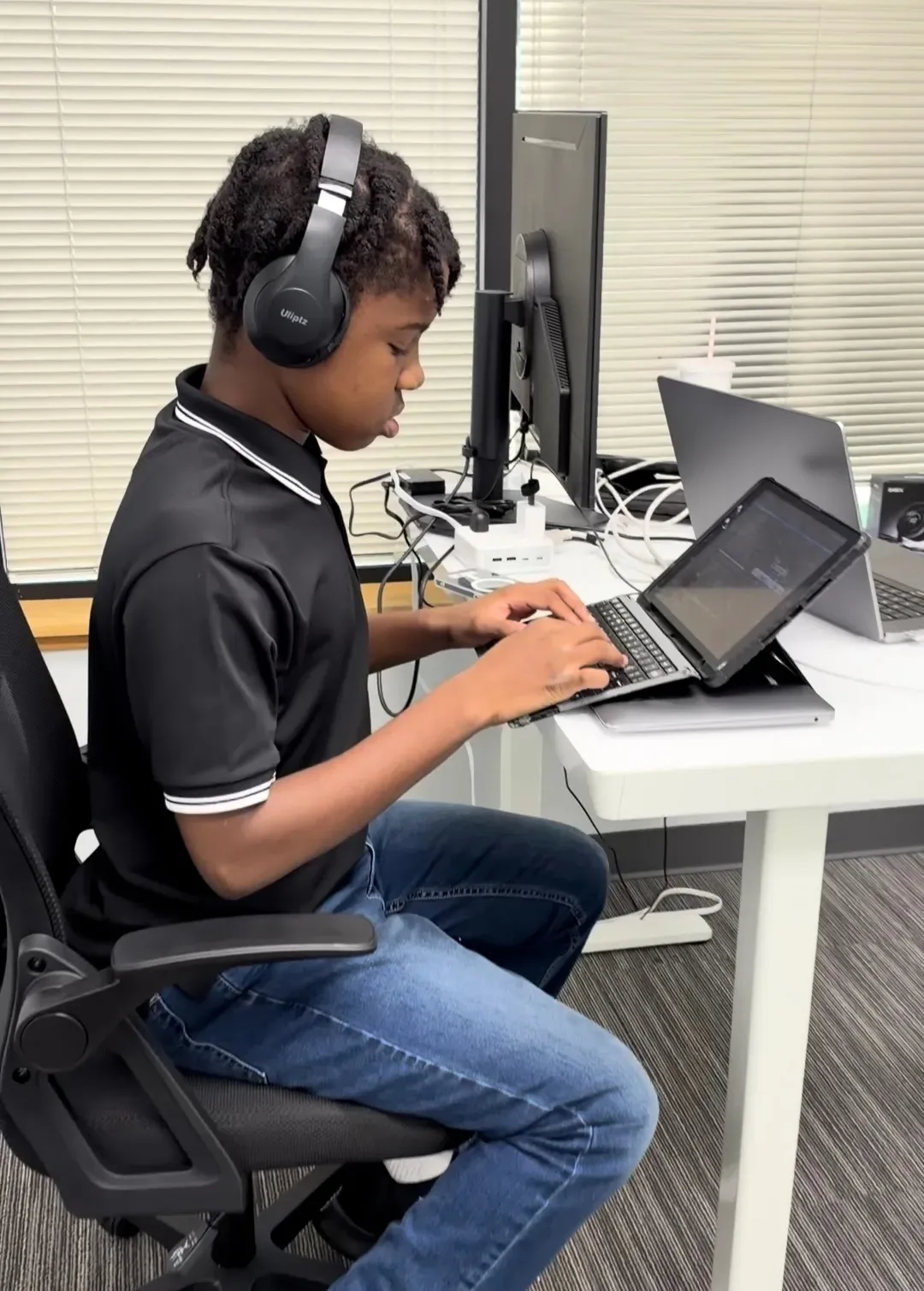
His name is Titus. He is homeschooled, and he led the design and development of the new site, about twenty pages of it, over roughly six weeks. I had rebuilt their earlier site on the same stack in the spring. So I took the project management role.
Last week we flew to Boulder together for the ribbon cutting, and the site went live the same day. He met the CEO and the CTO of a company building chip-scale quantum sensors. And he came away with a lot of praise for the new site he built for them.
The hardest part was not the code. It was pulling a big team into one voice, with leadership, content, design, SEO and communications each holding a piece of the story. The job was to show how the company is growing, from the capabilities it is building to the manufacturing and the team behind them, while leaving room for what is still to come. So the homepage invites you in, the capability pages go a layer deeper, and some pages say "in development" on purpose.
Around that, the site had to work where the audience actually is. It reads on a phone. It loads fast, because Titus cut the image weight by about 70 percent and stored video on a Cloudflare R2 server. It tells search engines and AI assistants they may read and cite it -- while keeping the content out of their training.
The part I think builders will appreciate is how he handled review. The CEO and the CTO needed to compare versions of the site, before and after, while the work kept moving. So he gave every round of feedback its own branch and its own live preview link. One baseline never changed, so "before" was always one click away, and each branch held only what one reviewer had asked for. The branches were then combined, checked on staging, and promoted to the live site.
Translation, every reviewer got their own copy of the site to react to, and the original stayed untouched for comparison.
In fairness, he did not do this alone. Mesa Quantum's designer gave him a style guide to build from, their team wrote the content, and he builds with Claude Code the way I do. I’m teaching my sons how to use AI tools like Claude Code because in the future, it’ll be like us using PowerPoint. What he did was carry the build.
This is the part of his education that happens beyond the classroom. I do not teach him web development and entrepreneurship from a textbook. I hand him real work with a real client and a real deadline, and then I teach whatever the work calls for.
Project management. Reading a style guide. Why you keep an untouched baseline when several people are giving feedback.
He is also running his own business, KitoCRO. Mesa Quantum was his fourth project, and it changed what the business is. KitoCRO started out building websites for local restaurants. Now it works with companies like this one, including a consulting firm and angel investor, and a defense contractor. We are running it now, not someday -- I take the parts that need an adult and experience, and he takes the rest.
One project is one project, and I am not claiming a website replaces an education. But it gave us something a classroom cannot: 2 months of working on the same thing. He learned things this fall that no syllabus in a classroom would have reached, the adult professional skills you only pick up on a real job.
How to take feedback from people who are not his dad. How to work to a date other people are counting on. What it feels like when something you built goes live.
The same rules apply at KitoCRO. Real work, real clients, and me beside him until the day it is all his.